Key Takeaways
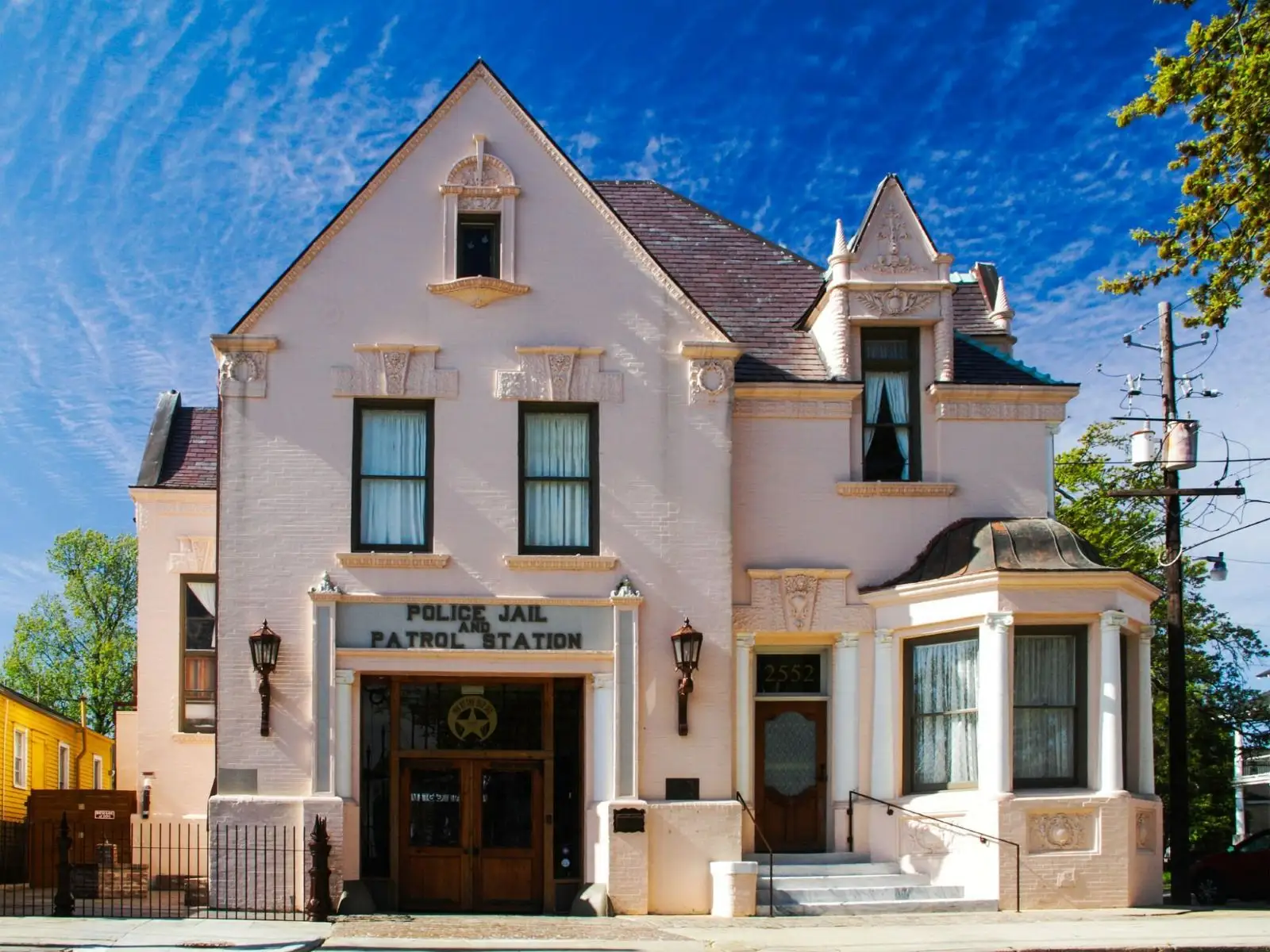
The Inn at the Old Jail is a meticulously restored 1902 Queen Anne Victorian that served as a police station and jail for decades in the Treme, the oldest African American neighborhood in the United States.
- Built in 1902 as the North Claiborne Avenue police station and jail
- Rescued in 2013 after trees were growing out of the floors post-Katrina
- Features original drunk tank tiles, marble stairs, and iron window bars alongside 19th-century French antiques
The only place in New Orleans where you'll be happy they didn't give you a key to leave until morning.
We've left the neon hum of the French Quarter for the quiet, oak-lined streets of the Tremé to check into one of the most unique historic renovations in the country: The Inn at the Old Jail.
From Precinct to Prestigious
This isn't just a themed hotel—it's a resurrection. Built in 1902, this imposing Queen Anne Victorian served as the North Claiborne Avenue police station and jail for decades. After its life as a precinct ended, it functioned as a library and a community center before being left to rot following Hurricane Katrina.
By the time the current owners rescued it in 2013, trees were literally growing out of the floors. They spent years meticulously restoring the structure, keeping the original "drunk tank" tiles, marble stairs, and even the heavy iron bars in certain windows. The result is a stunning blend of 19th-century French antiques and industrial grit.
The Global Context: The Rise of "Jail Hospitality"
While the architectural movement callled adaptive reuse isn't new, turning a jail into a luxury hotel is one of the most complex engineering feats in modern architecture. Jails are structurally designed to be oppressive, dark, and impenetrable, featuring heavy load-bearing granite, narrow corridors, and small windows. To make them hospitable and appealing, preservation architects have to perform radical spatial inversions: turning cell blocks into sun-filled atriums, and small isolation chambers into combined luxury suites.
While Boston's famous Liberty Hotel pulled this off on an enterprise scale—turning the historic 1851 Charles Street Jail cruciform rotunda into a 90-foot luxury glass atrium— The Inn at the Old Jail does something entirely different. It scales that raw, industrial penal history down into an intimate, neighborhood-scale Queen Anne Victorian. You aren't just sleeping inside an institutional monument; you are sleeping inside a restored community anchor.
The Room: Spending a Night in "The Cage"
If you want the full experience, you have to book "The Cage." It's a room with a serious personality—historically, this was the section of the jail used to hold neighborhood mischief-makers and juvenile offenders. Today, it's a chic, sun-drenched suite with high ceilings and exposed brick, but it still features the original iron bars that remind you exactly where you are.
Even the shower is constructed out of the former "overnight tank." It's the only place in New Orleans where you'll be happy they didn't give you a key to leave until morning.
Ready to Do Some "Hard Time"?
Book your stay at the Inn at the Old Jail in the historic Tremé
Book the Inn at the Old JailThe Neighborhood: The Soul of the Tremé
Stepping outside the front door of the Old Jail, you aren't in a tourist trap; you're in the Tremé, the oldest African American neighborhood in the United States. This is the bedrock of New Orleans culture. The immediate blocks are a vibrant tapestry of Creole cottages and double-shotgun houses.
You are within walking distance of St. Augustine Church—the oldest African-American Catholic parish in the country—and Louis Armstrong Park, home to the sacred Congo Square. This neighborhood doesn't perform for you; it lived through jazz, the Civil Rights movement, and the birth of the Second Line. It is the rhythmic heart of the city.
What makes the Tremé iconic?
Living History
As the oldest African American neighborhood in the United States, the Tremé is where jazz was born, where Congo Square hosted the only legal gathering of enslaved people in the country, and where the Second Line tradition continues to march every Sunday.
Architectural Character
Creole cottages, double-shotgun houses, and Victorian-era buildings line the quiet, oak-shaded streets. The architecture tells the story of a community that has endured and evolved through centuries of change.
Cultural Landmarks
St. Augustine Church, Louis Armstrong Park, Congo Square, and Backstreet Cultural Museum are all within walking distance, offering an immersive experience into the deep roots of New Orleans culture.
Don't miss a meal at nearby Dooky Chase Restaurant, where the late Chef Leah Chase's "Queen of Creole Cuisine" legacy lives on through world-class fried chicken and a gallery-worthy collection of African American art.
Why Stay Here?
The Inn at the Old Jail isn't just about sleeping in a converted jail—it's about experiencing one of the most remarkable adaptive reuse stories in New Orleans. The original architectural details preserved throughout the property create a stay that is equal parts history lesson and luxury retreat.
If you're looking for a different vibe in the Tremé or want to explore other neighborhoods, Inndira can help you discover boutique stays that match your style. Whether you prefer intimate romantic hideaways or historic hotels with compelling stories, we'll find your perfect match.
What's Next in Our Series?
Tomorrow, we're heading back to the French Quarter to check into a place that keeps the lights on for guests who checked out centuries ago with a visit to the most haunted hotel in New Orleans. See you for Day 9!
Note: This post contains affiliate links. If you book a stay through these links, we may earn a small commission at no cost to you. Thanks for supporting independent travel research!